

College Media Network - Search the largest news resource for college students by college students Jobs and internships for students -
Discovery hostage-police tape

Police Kill Armed Man Who Took 3 Hostages at Discovery Bldg. in Silver Spring

Captives Are Safe, But Police Are Checking Site for Explosives

Police shot and killed James Lee, who took three hostages at Discovery Communications Inc. in Silver Spring today. The hostages are safe, but the building is being searched for possible explosives, according to Montgomery County Police Chief Thomas Manger.

Full story

EATING FOR LIFE: Fast food and liquor are easier to find than fresh fruits and vegetables in some parts of the nation's capital. Through an eight-day serial narrative, a team of journalists examines why food deserts exist and what can be done about them. Video intro by Makula Dunbar/Howard University News Service

Food Desert Series

Searching for Healthy Meals in D.C.’s Food Deserts

Part 1: The grocery gap has helped to create food deserts in Washington. In the first installment of our nine-part daily series, Kendra Desrosiers explains why some residents trade fresh produce for high sugar and high salt.

Fresh peppers

Spending a Dime While Earning a Nickel

Part 2: For some families, it's hard to buy nutritional food — or even to buy food at all. And if they live in Southeast Washington, Nicole Austin reports, they might be paying 30 cents to $3 more for grapes, milk, bread, cheese and meat than residents in Columbia Heights.

Food Desert Metro Map

Shop 'Til You Drop: Trudging on Buses, Trains to Find Healthy Food

Part 3: Shopping can be quite hectic for residents who live in food deserts with spotty access to healthy food, and especially for those who rely upon public transportation. Simone Pringle, who is one of them, has also included a map of healthy food sites and their proximity to the Metro system.

Howard University Hospital farmers

Eating to Death

Part 4: Osteoporosis, certain cancers, Type 2 Diabetes, obesity, heart diseases, high-blood pressure and stroke all have one thing in common — they stem in part from unhealthy eating habits. Sophia Adem writes that 50 percent of Washington residents are obese or overweight, placing them at risk for diet-related diseases, which are leading causes of death.

Pepperpot, a Guyanese favorite.

Culture Influences How and What People Eat

Part 5: Whether it's soul food or delicacies from other countries, “culture is going to affect certain behaviors — what we eat, the amounts we eat and how we share,” said Jules Harrell, Ph.D., a professor of psychology at Howard University. By Crystal Cranmore.

Liquor store in Washington, D.C.

A 'Forty' or Fruit?

Part 6: Being able to find fruits and vegetables versus a “forty,” or 40-ounce bottle of malt liquor, has a major impact on health, Sophia Adem reports. The problem is that liquor stores outnumber grocery stores in many cities across the nation, and Washington is no exception.

Coy Dunston of Secrets of Nature in Ward 8

Pushing Vegetables, Fruits on the Corner

Part 7: “For years it has been believed that corner stores are a part of the problem and not the solution,” Kai Siendenburg, lead coordinator of the national Healthy Corner Stores Network, told Eboni Farmer. Secrets of Nature in Ward 8 is one of 12 corner stores in a local initiative to provide fruits and vegetables to residents of food deserts.

Rodman

In a Food Oasis, Residents Don't Have to Hunt for Fruits, Vegetables

Part 8: On any given day, Cleveland Park residents can find whatever fruits or vegetables they need close to their homes or even right across the street. They live in Ward 3, a food oasis with more grocery stores to serve residents with higher incomes.

Lead Stories

Top Story

Cover for Sit-In Package

Special Report

Fifty years ago, four freshmen at North Carolina Agricultural & Technical College took a stand against segregation by quietly sitting down at the F.W. Woolworth counter in downtown Greensboro, N.C. Today, 20 students from Howard University headed south to chronicle the 50th anniversary of the sit-ins in this multimedia special report, which will be periodically updated. Full story

Greensboro Four, Jesse Jackson, Melvin Alston, museum co-founder

Sit-In Breakfast Celebrates A&T Four, Struggle for Equality

Supporters fill ballroom to break bread with A&T Four, who shared words of thanks,  motivation and appreciation for non-violence at early morning breakfast. (Watch video by LeeSandre Alexandre.)

Full story

Rev. Jesse Jackson at 50th anniversary sit-in town hall

Panelists From Jesse Jackson to Stephen A. Smith Debate Activism

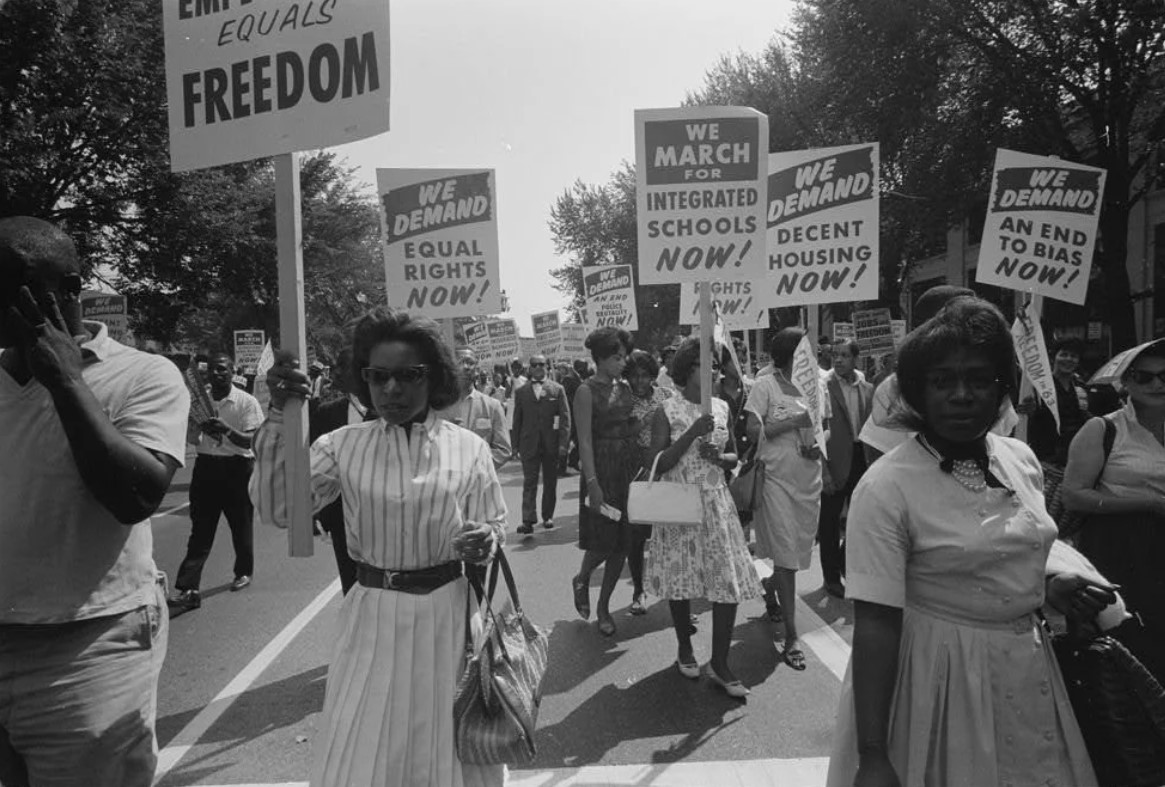
“Youth today don’t appreciate how humiliating segregation was,” the Rev. Jesse Jackson said during a town hall on activism at North Carolina A&T State University, the first of a series of events for the 50th anniversary of the Greensboro sit-ins.

Full story

Emmett Till and his mother, Mamie.

Emmett Till Today

14-Year-Old's Murder Planted a Seed in Planning of Sit-Ins

It’s been 55 years since the brutal murder of 14-year-old Emmett Louis Till, and the event still incites strong emotions in both whites and blacks. It was also one of the motivations for four freshmen to stage a sit-in at the F.W. Woolworth in 1960

Full story

“Mississippi Mourning: The Emmett Till Story” Stirs Audience

Anxious whispers transformed into dead silence as the softly lit auditorium turned pitch black. A group of terrified boys ripped through the balcony — panting, stumbling, yelling at each other to keep moving. A snowstorm was brewing in Greensboro that night, but the only thing on students' minds was why those boys were running.

Full story

February One Statue in front of Dudley Building at North Carolina A&T.

Sit-In Survivor Challenges Others to Do More

Thousands Gather for 50th Anniversary March, Museum Opening

Franklin E. McCain, one of the North Carolina A&T freshmen who staged the F.W. Woolworth sit-in, says what he did in 1960 is not enough. McCain views the opening of the International Civil Rights Center & Museum in Greensboro as a challenge to himself and the next generation. 

Full story

A WOMAN OF MANY HATS: Dorothy I. Height knew exactly which hats she wore to the White House and other events. “I was the last person to give them up when they went out of style, and I was among the first when I picked them up again,” she told National Public Radio host Michel Martin. She even inspired George Faison to stage “If This Hat Could Talk: The Untold Stories of Dorothy Height” at the Apollo Theater in 2006.—Zaria Poem/Howard University News Service